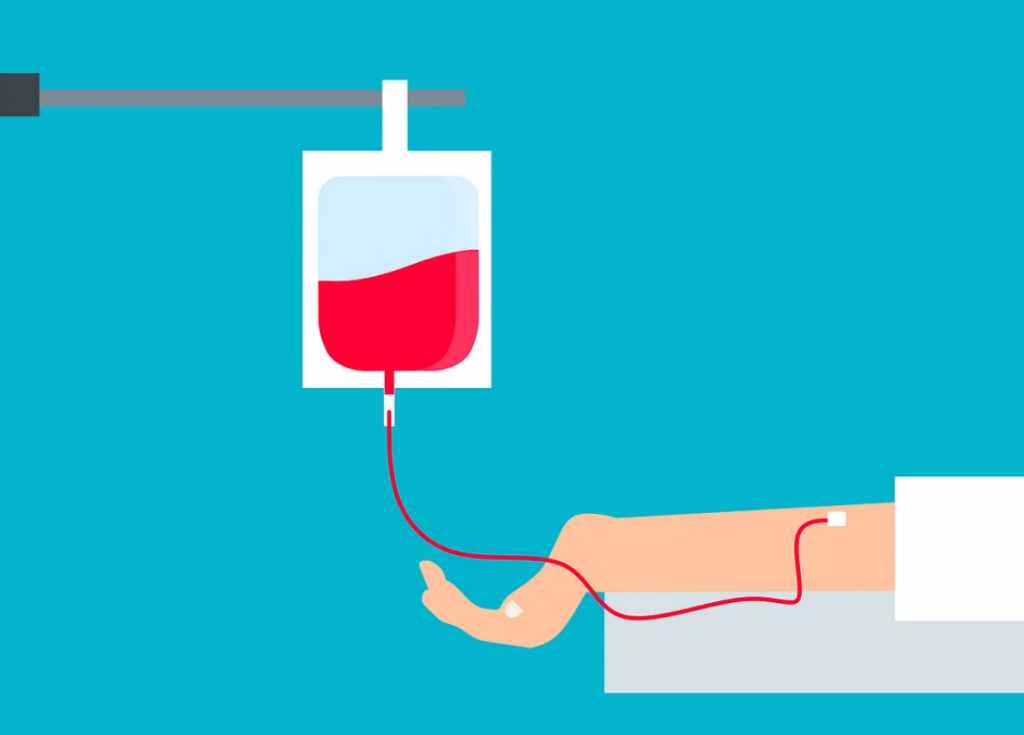


Selling blood plasma could become a reality in Brazil. A proposed constitutional amendment would allow donations through the private sector.
You book an appointment at a donation center. You show up and, while listening to music or watching TV, a team draws your blood to extract plasma — the liquid portion of blood that is highly valuable for manufacturing medicines around the world. At the end of the process, you receive a card loaded with cash. Just like that, you’ve made a paid donation.
This reality, common in countries like the United States and Germany, is now up for debate in Brazil’s Congress — and it has stirred considerable controversy.
The proposed constitutional amendment (PEC 10/2022) would change the country’s plasma-donation rules, allowing this material to be sold for the production of blood-derived products used to treat diseases, in transfusions, and in medicines. It’s as if blood were broken down into small fractions, from which the necessary proteins are extracted.
The proposal builds its case on data requested by Brazil’s Federal Court of Accounts (TCU) and the Public Prosecutor’s Office (MP), which point to 597,975 liters of plasma wasted between 2017 and 2020.
Currently, Hemobras — the state-owned Brazilian Company for Blood Products and Biotechnology — is responsible for processing blood plasma in the country. The amendment argues that Hemobras cannot meet the needs of Brazil’s public health system (the SUS, a universal, taxpayer-funded system), and that expanding production — and even commercializing plasma — would help meet demand. In Brazil, the sale of organs is prohibited by the Federal Constitution.
Hemobras, backed by the Ministry of Health, opposed the commercialization of human plasma. For the state company, the amendment opens the door to a commercial dimension of donation. There is fear that private companies, by paying for donations, would drain public blood banks and drive up the cost of treatment, since plasma would become a commodity. The company also argues that the amendment’s reasoning is already outdated, and that the answer is to strengthen the existing public blood network — not to redirect a policy that has been working well in recent years.
This issue reminded me of the recent blood-donation campaign that singer Ludmilla ran in partnership with Hemorio, Rio de Janeiro’s blood center: anyone who donated received a ticket to her concert. At the time, I even posted a tweet praising the initiative, suggesting that a reward — even a non-cash one, like this — could encourage people to visit a blood bank perhaps for the first time, and maybe become recurring donors.
Today, seeing the complexity of this system and the many loopholes that a loosening of the law could create, I think we should be very cautious in debating this amendment. When it comes to health care, Brazil is not much like the countries cited in the proposal — and that doesn’t mean it is backward or wrong. On the contrary, it stands out as a model to follow. We have a health system that serves as an example and, despite its many flaws and room for improvement, remains equal for all Brazilians.
If the core problem the amendment seeks to solve is Brazil’s plasma-processing capacity, perhaps Hemobras is right to suggest investing in expanding its own production, since it is a public body with no commercial interest.
Opening the door to financial exploitation of our own bodies could harm lower-income groups and unbalance the entire system. Someone in need of money could make donations that, if not controlled or limited, would seriously affect their health. From the government’s side, consider that public donations (unpaid), competing with private ones (paid), would fall far short of what’s needed — requiring public funds to maintain the supply of blood, plasma, and their derivatives. The result would surely be delays in supply and harder access to treatment as prices rise. There is a delicate road ahead, and it demands careful analysis by our representatives so that passing this law does not harm the many to benefit the few.
Originally published in Portuguese on felipemoura.xyz, August 30, 2023.